The Education Authority (EA), Police Service of Northern Ireland (PSNI), Safeguarding Board for Northern Ireland (SBNI) and INEQE Safeguarding Group have issued a joint letter to schools, colleges, youth clubs, sporting organisations, community groups and other settings working with children and young people, highlighting growing concerns around the misuse of artificial intelligence (AI) to create or manipulate harmful and sexualised images of children and young people.
The letter warns that AI tools can alter real photos or generate convincing fake imagery, causing significant distress and harm. Parents and carers are encouraged to seek help if anything causes concern, to talk with their children about responsible online behaviour and to think carefully before posting or sharing content.
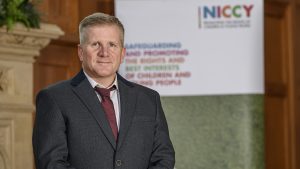
Bernie McNally, Independent Chair of the Safeguarding Board for Northern Ireland said: “We recognise how worrying it is for parents and carers to hear about images of young people being created or distorted in harmful ways. These situations can be very upsetting, but families are not alone. Across the safeguarding partnership, we are working together to support and protect young people.
“We urge parents and carers to make sure their child thinks carefully before creating or sharing content and never post anything that could harm others or put them at risk. Let them know they can come to you if something online makes them uncomfortable. Clear, practical advice is available on the Online Safety Hub to help guide these conversations.”
Eve Bremner, Chief Education Officer in the EA, said: “Ensuring the safety, wellbeing and dignity of children and young people is our highest priority, and it underpins everything we do.
“Our message is clear. Children and young people are at the heart of our response. By issuing this correspondence, we want to reassure parents and carers that support is available every step of the way. Schools, safeguarding partners and the wider statutory sector are working closely together to protect young people, to help them feel safe, and to ensure they are listened to and supported.
“We remain committed to providing clear guidance and practical help so families feel equipped to navigate these emerging risks. Above all, we want every child and young person to know they are not alone, and that their safety online is a shared responsibility we take extremely seriously.”
Detective Chief Inspector Claire Gilbert, Chair of the SBNI Online Safety Group said: “We are increasingly concerned about the misuse of artificial intelligence and digital tools to create or manipulate images of children and young people in harmful or sexualised ways.
“Even when images are generated or altered using AI, creating, possessing or sharing nude or sexualised images of anyone under 18 is illegal and is treated as child sexual abuse material.
“These images can be extremely distressing, and young people may not fully understand the serious harm and legal consequences involved. We strongly encourage parents and carers to speak to their children about responsible online behaviour and to seek advice from safeguarding professionals or police if they have any concerns.
“Our priority is always the safety and wellbeing of children and young people, and anyone coming forward will be treated sensitively.”
Jim Gamble, QPM – CEO INEQE Safeguarding Group, incorporating Safer Schools, said: “The rise of AI-generated images is a threat we cannot ignore because while the tech is new, the behaviour isn’t, abuse is real. We need to be crystal clear: the law applies to everyone. Creating, sharing and possessing these images is a crime, which is why it is critical that we educate and empower our children, and it starts at home.
“Parents, please don’t wait for a problem to start the conversation—talk to your children today about the risks involved, how to stay safe in online spaces and offline places, and the importance of respecting others. If you or they see something, say something. To the police and the platform. They will only want to help.
“We know these situations can be traumatic, causing significant distress to children and their families. Please, do not let fear or embarrassment stand in the way of their safety. Take a few minutes today, read the resources, and make sure you and your child know who they can talk to and where to get help.”
The agencies are warning that some young people may wrongly believe creating or sharing such images is a joke or harmless, without realising that creating, possessing or sharing sexualised images of anyone under 18, including AI-generated images, is illegal and classed as child sexual abuse material.
EA, PSNI, SBNI and INEQE are urging anyone affected to contact their school safeguarding lead or the police for advice. Support and guidance is also available through the Online Safety Hub, NSPCC, Safer Schools NI and the Childline Report Remove service, which helps young people under 18 to confidentially report and remove sexual images of themselves from the internet.
The agencies stressed that the law exists to protect children and young people from harm and that any response will be handled sensitively, with safeguarding at the forefront.
Further advice is available on the Online Safety Hub, which includes a guide on AI and Emerging Technologies explaining the key safeguarding concerns to be aware of and how to respond. Additional information is available from the NSPCC and Safer Schools NI.
A young person can also use the Report Remove service provided by Childline to help young people under 18 in the UK to confidentially report sexual images and videos of themselves and remove them from the internet.